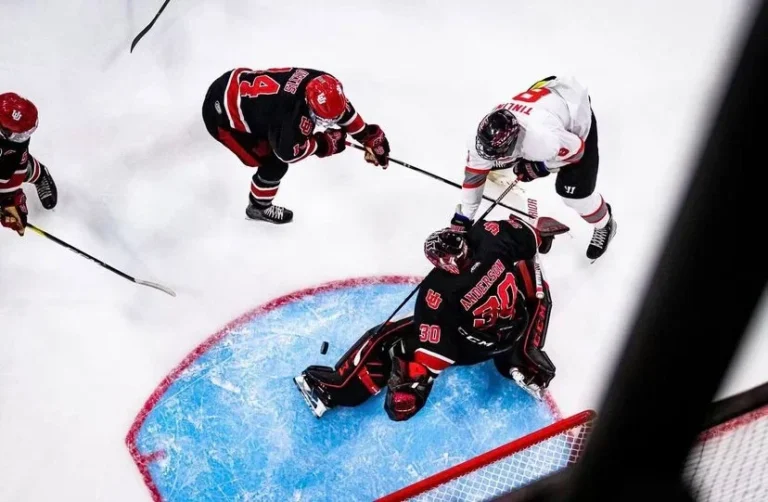
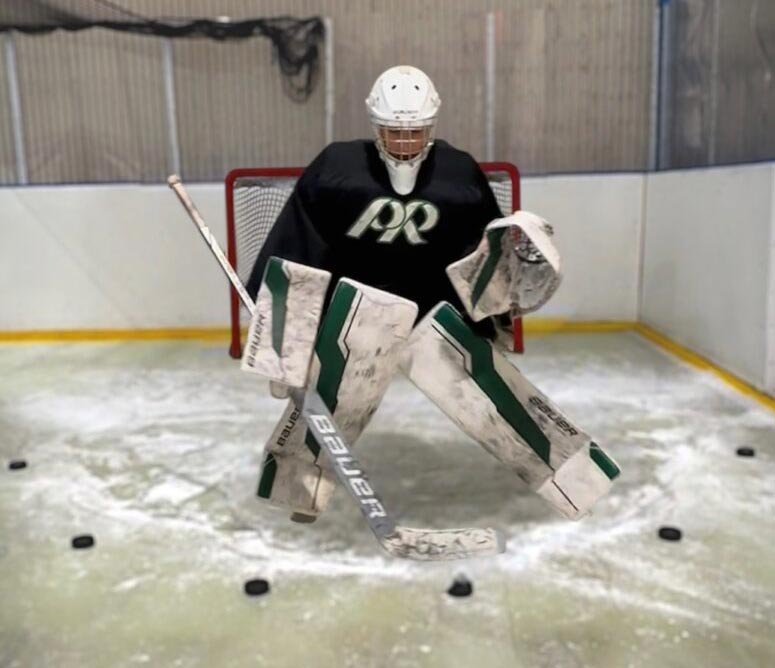
If you’ve ever watched your kid at practice, you’ve probably noticed something: the goalies aren’t moving like the other players. While skaters are blasting up and down the ice, goalies are sliding, dropping, popping back up, and shuffling side to side like they’re doing a whole different sport.
And honestly? That’s not too far off.
As a goalie coach, I hear this question a lot: “Can’t my goalie just train the same way as the rest of the team?” My answer is always the same: nope. Goalies are built differently, they move differently, and they need to train differently.
Let me walk you through why.
Goalies Aren’t Just “Backwards Skaters”
Think of players as sprinters—they cover distance, chase pucks, and need stamina to last long shifts. Now think of goalies as gymnasts mixed with short-distance sprinters—they explode into movement, then reset, then explode again.
Here’s what sets them apart:
- Movement style: Players move forward and back. Goalies move side-to-side, with sharp, controlled pushes.
- Flexibility: Goalies live in their hips and ankles. Without mobility there, the butterfly and recoveries are painful—or even dangerous.
- Explosive strength: Players build endurance for long shifts. Goalies train to pop up from the butterfly 30, 40, 50 times a game.
- Reaction time: Skaters plan their next move. Goalies react to pucks flying at them in half a second.
That’s why goalie training can’t just be “more laps” or “more squats.” It’s got to match the actual demands of the crease.
Side-by-Side: Player vs. Goalie Movements
Let’s look at a few common hockey movements and see how they change between skaters and goalies.
1. Shuffles vs. Forward Strides
- Player: Pushes hard for speed, trying to cover ice fast.
- Goalie: Takes short, controlled steps to stay square to the puck.
2. Butterfly Drops vs. Crossovers
- Player: Uses crossovers to build speed on turns.
- Goalie: Explodes down into a butterfly and immediately back up. It’s not speed—it’s power and stability.
3. T-Pushes vs. Acceleration Strides
- Player: Bursts forward to chase the puck.
- Goalie: Fires sideways with a single big push, trying not to overslide.
4. Puck Tracking vs. Stickhandling
- Player: Needs slick hands to control the puck.
- Goalie: Needs sharp eyes to follow the puck through traffic—sometimes without moving their stick until the last split second.
Different job. Different muscles. Different training.
Common Training Mistakes for Goalies
Here’s where I see goalies (and well-meaning parents) get tripped up:
- Too much endurance training: Goalies don’t need to run miles. Their game is quick bursts, not marathons.
- Skipping mobility work: Tight hips and ankles = sore goalie. Flexibility has to be part of the routine.
- Ignoring reaction training: Players don’t usually practice with tennis balls or flashing lights—but goalies should. Quick hands and quicker eyes make a huge difference.
The Mental Side (That We Can’t Forget)
Goalies don’t just need physical training—they need mental training, too. Staying calm when 10,000 fans (or even just grandma and grandpa in the stands) are watching you is a skill. So is bouncing back after letting in a tough goal.
This is why goalie development often takes longer than for players. It’s not just about the body—it’s about building the brain and nerves of steel, too.
What Parents Should Know
If you’re raising a young goalie, here’s the big takeaway:
- Train them like goalies, not like players.
- Focus on explosive power and mobility, not long-distance stamina.
- Keep building their core strength—it’s the secret to stability in the crease.
- Encourage mental resilience—because the pressure is real.
- Don’t rush into year-round goalie-only training. A broad athletic base (different sports, fun activities) helps prevent burnout and injuries.
Quick Takeaways
- Goalies and skaters play the same sport—but they’re training for two totally different jobs.
- Goalies need short bursts of power, strong hips and core, and top-notch reaction speed.
- Training that ignores these differences doesn’t just slow development—it risks injury.
When goalies get the right training, they don’t just survive in the crease—they thrive.
Want to Dive Deeper?
Check out our post on Core Stability for Goalies: The Secret Behind Every Butterfly Recovery. It’ll show you exactly why the core is a goalie’s hidden superpower.